Faculty profile
Diana Velikonja
Back to facultyResearch
Dr. Velikonja completed her graduate studies in the Biological Psychology/Neuroscience Program at the University of Waterloo. She completed her residency and post-doctoral training at Hamilton Health Sciences and McMaster University and became licensed for independent practice specializing in Neuropsychology and Clinical Psychology with children and adults. She has worked since 1997 in a clinical and research capacity at the Acquired Brain Injury Program at Hamilton Health Sciences and is currently working in the Integrated Adult Concussion Clinic, where she continues to work with residents and research students. She actively publishes and is a reviewer for several scientific journals. Her roles include: · Chief of Psychology Practice at Hamilton Health Sciences between 2004 and 2011. · Past-President of the Hospital Psychology Association of Ontario · Past-President of the Ontario Psychological Association · Former Director on the Board of the Hamilton Brain Injury Association · Advisory Board for the Ontario Neurotrauma Foundation and the Living Guidelines · Board of Directors for Center for Diverse Learners · Associate Professor in the Department of Psychiatry and Behavioural Neurosciences at the DeGroote School of Medicine, McMaster University · Thesis advisor Department of Psychology at McMaster University. · Chair of the RxP Committee for OPA - advocating for the expansion of scope of practice for psychologists to include prescribing psychotropic medications. · Founding partner of Lifespan Psychological and Neuropsychological Services Dr. Velikonja continues to work on the development of guidelines for the assessment and treatment of concussion as well as moderate to severe traumatic brain injury. Dr. Velikonja has also completed the post-doctoral master’s degree program in Clinical Psychopharmacology and provides consultation in this domain of practice.
Research areas are derived from OpenAlex topics of their publications.
53 publications.
FROM THE MOUTHS OF BABES
BLOOM K, BOUDREAU T, BULLER T, VELIKONJA D
Ontario Psychological Association Position Statement and Practice Guidelines on Mild Traumatic Brain Injury (Concussion)
Velikonja D, Abrar K, Gargaro J, Akbari P, Hamilton JM, Day DJA, Kurzman D, McKinnon E, Kaplan R, Saverino C
Interrelationship of brain fog, pain, and psychological distress with quality of life of Veterans with painful symptoms
Dass R, Kadakia Z, Rosen NP, Clarke-Tizzard S, Harris J, Velikonja D, Packham T
Prescriptive Authority for Psychologists and Scope of Practice: A National Survey of Canadian Psychologists and Psychology Students
Sepehry AA, Nussbaum D, Shearer D, Toledano R, Ax RK, Velikonja D, Butler B, Richard J
Exploring trends in brain fog and quality of life outcomes in Veterans with pain symptoms: A cross-sectional study
Dass R, Harris J, Velikonja D, Packhama T
Updated Canadian Clinical Practice Guideline for the Rehabilitation of Adults With Moderate to Severe Traumatic Brain Injury: Behavioral Recommendations
MacKenzie HM, Velikonja D, Devito J, Devito L, Patsakos EM, Bayley M, Teasell R, Mehta S
Updated Canadian Clinical Practice Guideline for the Rehabilitation of Adults With Moderate to Severe Traumatic Brain Injury: Mental Health Recommendations
Mehta S, Devito L, Patsakos EM, Devito J, Velikonja D, Bayley M, Teasell R, MacKenzie HM
INCOG 2.0 Guidelines for Cognitive Rehabilitation Following Traumatic Brain Injury: Methods, Overview, and Principles
Bayley MT, Janzen S, Harnett A, Teasell R, Patsakos E, Marshall S, Bragge P, Velikonja D, Kua A, Douglas J
INCOG 2.0 Guidelines for Cognitive Rehabilitation Following Traumatic Brain Injury, Part II: Attention and Information Processing Speed
Ponsford J, Velikonja D, Janzen S, Harnett A, McIntyre A, Wiseman-Hakes C, Togher L, Teasell R, Kua A, Patsakos E
INCOG 2.0 Guidelines for Cognitive Rehabilitation Following Traumatic Brain Injury, Part V: Memory
Velikonja D, Ponsford J, Janzen S, Harnett A, Patsakos E, Kennedy M, Togher L, Teasell R, McIntyre A, Welch-West P
Roles and appointments
- Neuropsychologist, Acquired Brain Injury Program, Hamilton Health Sciences
Frequent collaborators
12Jocelyn Harris
Rehabilitation Science
7 shared papers, latest 2025
Erin Warriner
Psychiatry & Behavioural Neurosciences
6 shared papers, latest 2013
Catherine Wiseman-Hakes
Rehabilitation Science
6 shared papers, latest 2023
Scott McCullagh
Psychiatry & Behavioural Neurosciences
5 shared papers, latest 2015
Nora Cullen
Medicine
3 shared papers, latest 2019
Steven Hanna
Health Research Methods, Evidence, and Impact
3 shared papers, latest 2017
Researchers with similar interests
Scott McCullagh
Psychiatry & Behavioural Neurosciences
Traumatic Brain Injury Research, Traumatic Brain Injury and Neurovascular Disturbances
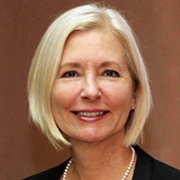
Nora Cullen
Medicine
Traumatic Brain Injury Research, Traumatic Brain Injury and Neurovascular Disturbances
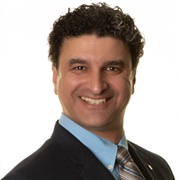
Angelo Mikrogianakis
Pediatrics
Traumatic Brain Injury Research, Traumatic Brain Injury and Neurovascular Disturbances
Laura Purcell
Pediatrics
Traumatic Brain Injury Research, Traumatic Brain Injury and Neurovascular Disturbances

Lyn Turkstra
Rehabilitation Science
Traumatic Brain Injury Research, Stroke Rehabilitation and Recovery

Eric Koelink
Pediatrics
Traumatic Brain Injury Research, Traumatic Brain Injury and Neurovascular Disturbances
A short, specific email works best. This draft uses one of their recent papers; replace the parts in brackets with your own details before sending.